How to File a Pet Insurance Claim Step by Step
Filing a pet insurance claim generally means paying your vet bill upfront, then submitting an itemized invoice through your insurer’s app or website for reimbursement. Most claims are processed within 5 to 14 business days if the paperwork is complete and the condition is covered. Knowing the exact steps — and what to do if a claim is denied — can save you weeks of back-and-forth with your insurer.
How to File a Pet Insurance Claim: The Basics
Unlike human health insurance, almost all U.S. pet insurance works on a reimbursement model. That means you pay the veterinary clinic directly at the time of service — typically via card, cash, or a payment plan through the clinic — and then you file a claim with your insurer to get reimbursed for the eligible percentage (commonly 70%, 80%, or 90%, depending on your plan). Understanding how to file a pet insurance claim correctly the first time helps you avoid delays, missing-document rejections, and unnecessary follow-up calls.
The overall cost flow looks like this in a realistic example: your dog has an emergency visit for a torn ligament, the total bill comes to $3,200. You pay the full $3,200 at the clinic’s front desk. Your policy has an $80% reimbursement rate and you’ve already met your $250 annual deductible for the year. After the claim is processed, you’d typically receive a reimbursement of around $2,560 (80% of $3,200), issued by direct deposit or check, with processing time that varies by insurer.
Step-by-Step Guide: How to File a Pet Insurance Claim
- Visit the veterinarian and get treatment. Take your pet in for the covered issue — whether it’s an accident, illness, or a routine wellness visit if your plan includes a wellness add-on. Make sure the clinic documents the diagnosis, treatment, and any procedures clearly in the medical record, since your insurer will use these details to evaluate the claim.
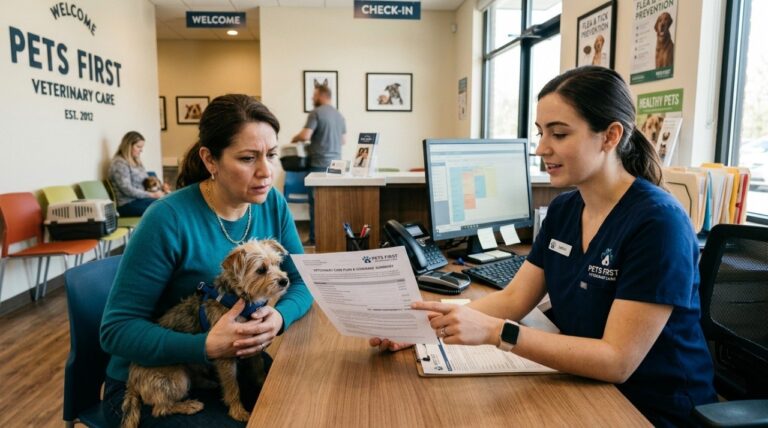
- Pay the bill at the clinic. Nearly all U.S. veterinary clinics require payment at the time of service. Budgeting for this upfront cost — which can range from a modest exam fee to a very large bill for surgery or emergency care — is one of the most important things pet owners need to plan for, since reimbursement comes later, not at checkout.
- Request an itemized invoice. Ask the front desk for a fully itemized receipt (not just a payment confirmation) that lists each service, medication, and procedure with individual costs. A summary total alone is usually not accepted by insurers — they need the line-item breakdown to determine what’s covered.
- Save the invoice and any medical records. Keep both a digital copy (photo or PDF) and, if possible, the physical receipt until the claim is fully resolved. Many insurers also want the pet’s relevant medical history, especially for a first-time claim on a chronic condition.
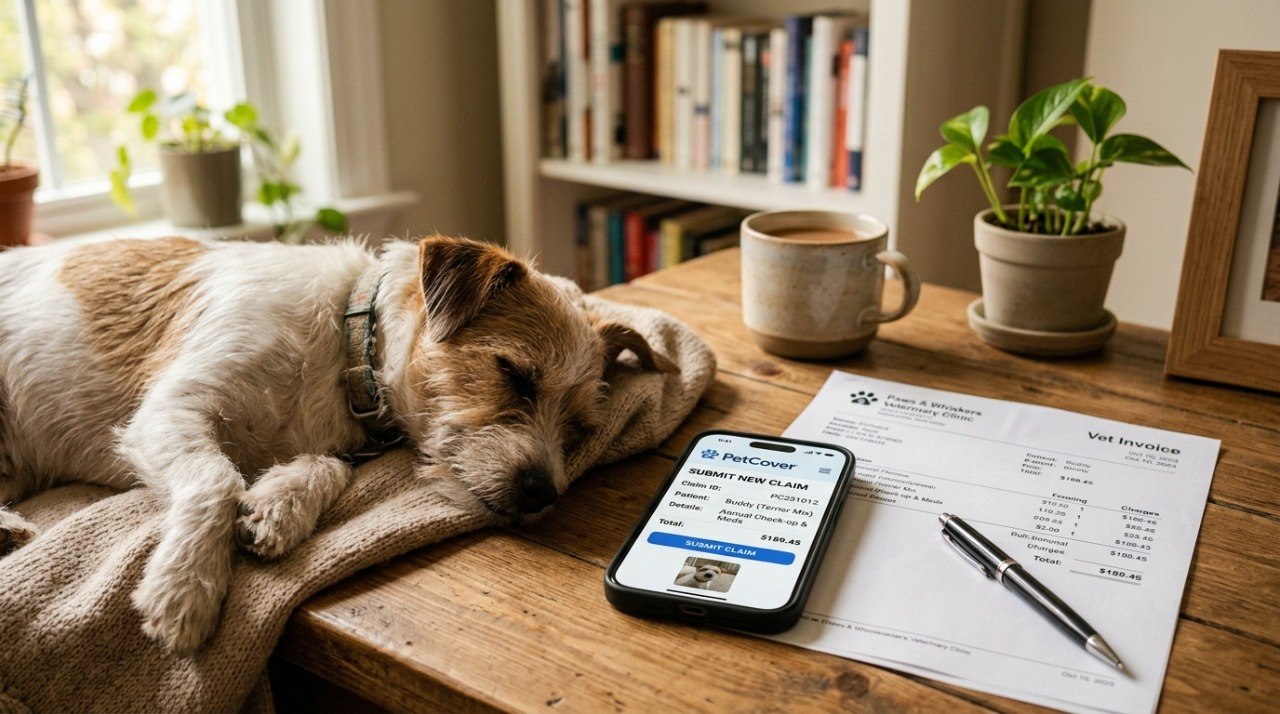
- Log into your insurer’s app or online portal. Nearly every major pet insurer — Trupanion, Healthy Paws, Embrace, Nationwide, Fetch, Lemonade, and others — has a mobile app or web portal built specifically for claim submission. Create an account if you haven’t already, and locate the “File a Claim” or “Submit a Claim” section.
- Fill out the claim form. This usually asks for your pet’s name and policy number, the date of service, the reason for the visit, and the total amount paid. Double-check every field, since a mismatched date or amount is one of the most common reasons for processing delays.
- Upload your invoice and supporting documents. Attach clear photos or scans of the itemized invoice and any requested medical records directly in the app. Blurry or cropped images are a frequent cause of claims being sent back for resubmission, so take a moment to confirm the text is legible before submitting.
- Submit the claim and note your confirmation number. After submission, you should receive a confirmation email or in-app notification with a claim reference number. Save this — you’ll need it if you have to follow up.
- Wait for the insurer’s review. Processing times vary by company, but a realistic range is 5 to 14 business days for a straightforward claim, and up to 30 days for more complex cases requiring additional medical review. Some insurers, like Trupanion, offer direct-to-vet payment integrations that can settle certain claims in as little as a day or two.
- Receive your reimbursement. Once approved, payment is typically sent via direct deposit (fastest, often 2-5 business days after approval) or by mailed check (slower, sometimes 1-2 weeks). Compare the reimbursed amount against your policy’s stated percentage and deductible status to make sure the math checks out.
- Review the Explanation of Benefits (EOB). The insurer will send a breakdown showing what was covered, what was excluded, and why. Read this carefully — it will show you exactly how your deductible and reimbursement rate were applied.
- If the claim is denied or underpaid, file an appeal. Contact customer service, ask for the specific denial reason in writing, and gather any additional documentation (vet notes clarifying the diagnosis, proof the condition isn’t pre-existing, etc.). Most insurers have a formal appeals process with its own deadline, often 30 to 90 days from the denial date, so don’t delay.
Common Mistakes That Slow Down a Pet Insurance Claim
Even a well-intentioned claim can get delayed for avoidable reasons. Watch out for these frequent pitfalls when you file a pet insurance claim:
- Submitting a payment receipt instead of an itemized invoice. A credit card slip showing “$450 paid” tells the insurer nothing about what was treated — always get the detailed, line-by-line invoice.
- Leaving fields blank on the claim form. Incomplete forms are one of the top reasons claims bounce back for resubmission, adding a week or more to the timeline.
- Filing late. Most insurers set a submission deadline of 90 to 365 days from the date of service. Filing as soon as possible after your visit protects you if you later need to gather additional documentation.
- Not disclosing pre-existing information accurately. If your pet had a prior related issue, being upfront about it in your policy application avoids claims disputes down the road.
- Assuming verbal confirmation is enough. Always get a claim reference number and, ideally, written confirmation of submission — phone conversations are harder to reference if a dispute arises later.
How Reimbursement Percentage and Deductibles Affect Your Payout
Two policy features determine exactly how much you get back after filing a pet insurance claim: the annual deductible and the reimbursement percentage. The deductible is the amount you must pay out-of-pocket each policy year before the insurer starts reimbursing claims; the reimbursement percentage is the share of the remaining eligible costs the insurer pays. For example, with a $300 annual deductible and 90% reimbursement, a $1,000 covered claim (assuming the deductible hasn’t yet been met that year) would work out to: $1,000 minus $300 deductible = $700 eligible amount, then 90% of $700 = $630 reimbursed to you. Once your deductible has been met for the year, subsequent claims are reimbursed at straight 90% of the eligible amount with no further deductible subtracted.
What to Do If Your Pet Insurance Claim Is Rejected
A denial isn’t always final. Common reasons for rejection include the condition being classified as pre-existing, the treatment falling under a policy exclusion (like certain hereditary conditions during a waiting period), incomplete documentation, or a clerical mismatch between the claim form and the invoice. Here’s how to respond:
- Request the denial reason in writing and read the relevant policy clause yourself — don’t just take a phone summary at face value.
- Ask your vet to write a letter clarifying the diagnosis timeline if the insurer claims the condition was pre-existing but you believe it was newly diagnosed.
- Resubmit with any missing documents if the denial was due to incomplete paperwork — this is the most common and most fixable reason for rejection.
- Escalate to a supervisor or formal appeals department if you believe the denial was made in error.
- As a last resort, most states allow you to file a complaint with your state’s Department of Insurance if you believe the insurer acted in bad faith.
Frequently Asked Questions
How long does it take to get reimbursed after filing a pet insurance claim?
Most straightforward claims are processed within 5 to 14 business days, with payment following a few days after approval. More complex claims involving chronic conditions or additional medical review can take up to 30 days.
Do I need to pay the vet first before insurance covers anything?
In almost all cases, yes. Pet insurance in the U.S. is reimbursement-based, so you pay the clinic directly and then file a claim to get money back. A small number of insurers offer direct vet payment in select markets, but this is not yet the industry standard.
What documents do I need to file a pet insurance claim?
At minimum, you’ll need an itemized invoice from the vet and the completed claim form. Some claims, especially for chronic or complex conditions, may also require medical records, diagnostic test results, or a letter from your veterinarian.
Can I file a claim through my phone?
Yes. Virtually every major pet insurer offers a mobile app that lets you photograph your invoice, fill out the claim form, and submit everything in a few minutes.
What if I forgot to get an itemized invoice?
Contact the veterinary clinic and request a copy — most clinics keep detailed billing records and can reissue an itemized invoice even after the visit.
Is there a deadline for filing a pet insurance claim?
Yes, most insurers require claims to be submitted within 90 to 365 days of the date of service, depending on the company. Check your policy’s specific timeframe and try to file as soon as possible after your visit.
Disclaimer
This article is for general informational purposes only and is not a substitute for the specific terms of your individual policy. Claim processes, required documentation, processing times, and appeal procedures vary significantly by insurance provider and by state. Always refer to your policy documents and contact your insurer directly for guidance on your specific claim.
Want the full picture on pet insurance explained? See our Pet Insurance Explained guide for more.