
Why Are Vet Bills Rising? Price Trends Explained
If it feels like your vet bills keep climbing year after year, you’re not imagining it. Pet owners across the country are noticing that routine visits, medications, and especially emergency care cost more than they used to. Understanding why vet costs rising has become such a widespread trend can help you plan ahead, budget realistically, and make informed decisions about care and insurance — without assuming something suspicious is going on at your own clinic.
It’s Not Just You: A National Trend
Veterinary care costs have been increasing faster than general inflation in recent years, a pattern reflected in consumer price data and widely discussed within the veterinary industry itself. This isn’t isolated to one region or one type of clinic — it’s a structural shift affecting general practices, specialty hospitals, and emergency clinics alike. Several distinct forces are driving this trend at the same time, which is part of why the increases have felt so noticeable.
What the Price Data Shows
The U.S. Bureau of Labor Statistics tracks veterinarian services as a line in the Consumer Price Index. Trade-press coverage of that data reported that U.S. veterinary services prices rose 7.1% in 2025, versus about 5% for pet services overall (Global Pet Industry). Looking further back, a calculator built on the same BLS series shows veterinarian services prices about 312% higher in 2026 than in 1997, an average of roughly 5% a year. More recently, the BLS reported that veterinarian services prices were up 4.6% over the 12 months to September 2026, compared with 3.7% for the overall index (BLS CPI release, September 2026); BLS notes this is a special index with a smaller sample. These are national figures; what your clinic charges can differ.
The Main Reasons Vet Costs Are Rising
1. General Inflation and Rising Overhead
Veterinary clinics face the same inflationary pressures as any other business: higher rent, higher utility costs, higher wages for support staff, and higher prices for basic medical supplies. Since veterinary medicine is labor- and equipment-intensive, these broad economic pressures translate fairly directly into higher prices for pet owners.
2. Corporate Consolidation of Veterinary Clinics
Over the past couple of decades, a growing share of independent veterinary practices have been acquired by large corporate groups and private equity-backed chains. Consolidation can bring benefits like standardized quality protocols and better access to capital for new equipment, but it has also been widely discussed as a factor in rising prices, since corporate ownership structures often come with different pricing strategies, overhead costs, and profit expectations than a small independent practice.
3. The Cost of Advanced Medical Technology
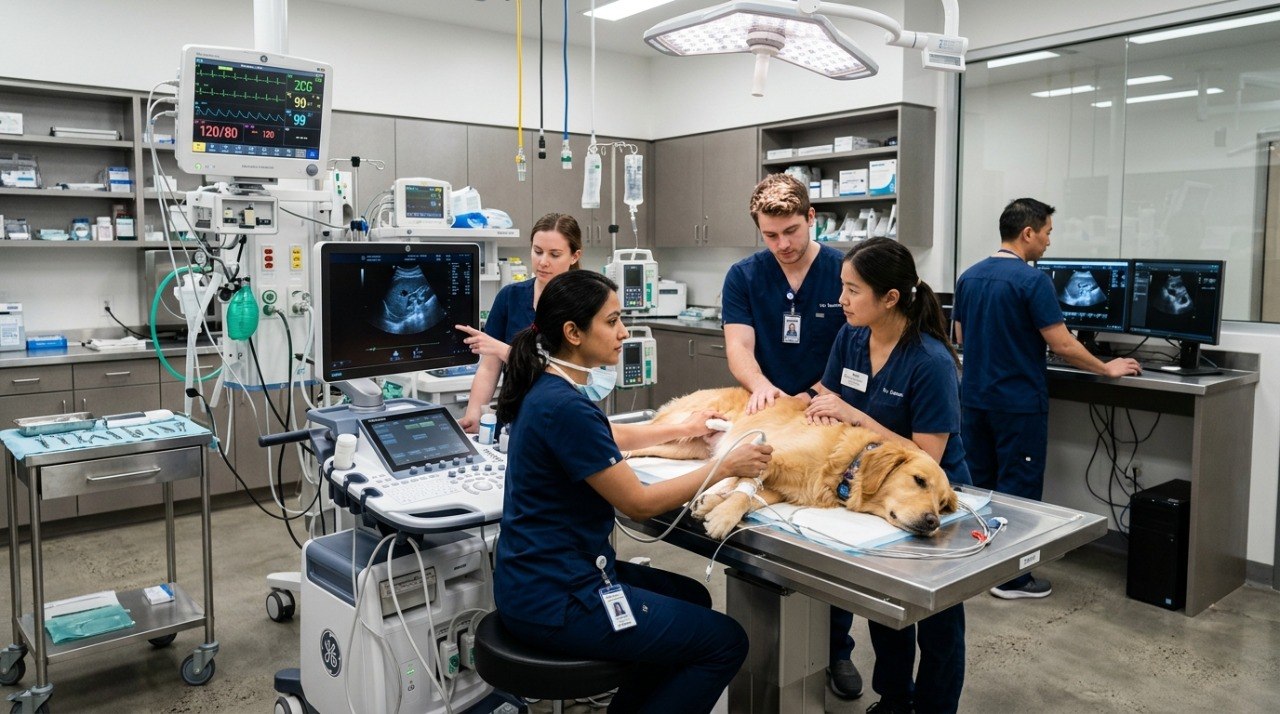
Veterinary medicine has advanced dramatically. Many clinics now offer in-house digital imaging, ultrasound, advanced bloodwork analyzers, and even MRI or CT access through referral — tools that were once found only in human hospitals. This equipment is expensive to purchase, maintain, and staff, and while it enables much better diagnostics and outcomes for pets, that capability comes at a real financial cost that’s reflected in service pricing.
4. A Shortage of Veterinarians and Veterinary Staff
The veterinary profession has faced a well-documented workforce shortage, with demand for veterinary services growing faster than the supply of new graduates entering the field, particularly in certain regions and in emergency/specialty medicine. When demand outpaces supply, wages rise to attract and retain staff, and clinics often need to invest more in recruiting, training, and retention — costs that factor into what they charge for services. Veterinary support staff, including technicians, have also seen increased demand across the industry.
5. Increased Specialization and Higher Standards of Care
Pet owners today often expect (and can access) a level of specialized care that simply wasn’t common a generation ago — board-certified surgeons, oncologists, cardiologists, dermatologists, and behaviorists are all more available than before. This specialization generally means better outcomes for pets with complex conditions, but specialist training, equipment, and referral infrastructure all add cost to the overall system, even for pet owners who never see a specialist directly.
6. Rising Cost of Pharmaceuticals and Medical Supplies
Similar to human healthcare, the cost of many veterinary pharmaceuticals, anesthesia agents, and single-use medical supplies has increased. Global supply chain factors and manufacturing costs affect veterinary medicine just as they affect other areas of healthcare.
Summary Table: Key Drivers of Rising Vet Costs
| Driver | How It Affects Pricing |
|---|---|
| General inflation | Higher rent, wages, utilities, and supply costs get passed on to clients |
| Corporate consolidation | Changing ownership and pricing structures across many independent practices |
| Advanced medical technology | Better diagnostics and treatment come with higher equipment and maintenance costs |
| Veterinarian and staff shortages | Higher wages and recruitment costs to attract and retain qualified staff |
| Growth of specialty medicine | More advanced, higher-cost treatment options are now available and expected |
| Pharmaceutical and supply costs | Medication and single-use supply prices have risen across the healthcare sector broadly |
How This Compares to Human Healthcare Cost Trends
Many of the forces behind rising veterinary costs echo trends seen in human healthcare over the past several decades: consolidation of independent providers into larger corporate networks, growing reliance on expensive diagnostic technology, and a persistent gap between the supply of trained medical professionals and growing demand for care. Pet owners who have watched human healthcare premiums and out-of-pocket costs climb over the years may recognize a familiar pattern playing out in veterinary medicine, just on a somewhat smaller scale and with a shorter history of corporate consolidation.
One meaningful difference is that veterinary medicine doesn’t have an equivalent to broad government-funded insurance programs, which means the entire cost burden for pet owners falls on out-of-pocket payment or private pet insurance. This makes the rising cost trend feel especially direct and immediate to pet owners, since there’s no larger system absorbing part of the increase.
How Regional Differences Affect Vet Costs
Vet costs rising isn’t a uniform phenomenon across the country — location plays a significant role. Clinics in major metropolitan areas with high costs of living, commercial rent, and staff wages tend to charge more than clinics in smaller towns and rural areas, mirroring cost-of-living differences seen in most other service industries. Areas with a higher concentration of corporate-owned clinics or a more severe local veterinarian shortage may also see steeper price increases than regions with a strong base of independent practices and stable staffing. If cost is a major concern, it can be worth comparing prices at a few different clinics within a reasonable driving distance, since meaningful differences can exist even between neighboring towns.
What Veterinary Professionals Say About the Trend
It’s worth noting that rising costs are also a source of frustration within the veterinary profession itself. Many veterinarians entered the field primarily out of a desire to help animals and describe real discomfort when cost becomes a barrier between a pet and needed care — a phenomenon sometimes referred to as “economic euthanasia,” where a treatable condition goes untreated because of cost. Increased awareness of this tension has driven growth in charitable veterinary care programs, expanded telehealth options, and continuing education for veterinary staff on having compassionate, transparent conversations about cost and alternative treatment paths.
What This Means for Pet Owners
Understanding why vet costs are rising doesn’t make the bills easier to pay, but it can help you plan more effectively. A few practical takeaways:
- Budget proactively for routine and unexpected care rather than being caught off guard, since costs are unlikely to trend downward.
- Consider pet insurance while your pet is young and healthy, since premiums are generally lower before pre-existing conditions develop, and insurance can help buffer against the rising cost of emergency or specialty care.
- Build a dedicated pet emergency fund if insurance isn’t the right fit for your situation, so a sudden diagnosis doesn’t become a financial crisis.
- Ask about cost-saving alternatives like vet school clinics, telehealth for minor issues, and generic medications, all of which can meaningfully offset rising baseline costs.
- Stay current on preventive care, since catching issues early is almost always less expensive than treating an advanced condition later.
Is There Any Relief in Sight?
Some forces may ease over time — for example, more veterinary schools have expanded class sizes to address the workforce shortage, and increased competition among corporate groups, insurers, and telehealth providers could eventually put some downward pressure on pricing in certain segments. However, the underlying drivers — inflation, advanced technology, and higher standards of specialized care — are unlikely to reverse entirely. The most realistic approach for pet owners is to plan for costs to remain elevated and to build a financial strategy (insurance, savings, or both) around that reality.
Frequently Asked Questions
Are vet costs really rising faster than other healthcare costs?
Veterinary care costs have outpaced general consumer inflation in recent years, a trend widely reported and discussed within the veterinary and pet insurance industries, though the exact rate varies by region and type of service.
Is corporate ownership of vet clinics really a factor in higher prices?
It’s one of several contributing factors that has been widely discussed in industry analysis. Corporate consolidation has changed how many practices are priced and operated, though independent clinics have also faced cost pressures from inflation and staffing shortages.
Why does advanced veterinary technology make routine visits more expensive too?
Even routine visits are priced within a clinic’s overall cost structure, which includes the equipment, facility, and staff needed to offer advanced services when necessary. This overhead affects pricing across all services, not just the advanced ones.
Will vet costs eventually come back down?
It’s unlikely costs will decrease significantly, since the core drivers (inflation, technology costs, specialized care) tend to be long-term structural trends rather than temporary spikes. Growth in the veterinary workforce and increased competition may help moderate the rate of increase over time.
Does the rising cost of vet care mean quality is improving too?
In many respects, yes — pets today have access to more advanced diagnostics, more effective medications, and more specialized treatment options than in the past, which has contributed to better health outcomes and longer lifespans for many pets.
What can I do now to protect myself from rising vet costs?
Consider pet insurance while your pet is young and healthy, build a dedicated savings fund for veterinary expenses, ask about cost-saving options like generics and telehealth, and prioritize preventive care to catch problems early.
Disclaimer: This article is for general informational and educational purposes only and does not constitute financial, insurance, or veterinary advice. Cost trends discussed here are general observations and may not reflect pricing at any specific clinic. Always consult your veterinarian regarding your pet’s care and a licensed insurance professional regarding coverage decisions.
Want the full picture on affording vet care? See our Affording Vet Care guide for more.