Generic Pet Medications: How to Save at the Pharmacy
Prescription medications can quietly become one of the biggest recurring costs of pet ownership, especially for pets managing chronic conditions like arthritis, allergies, or thyroid disease. The good news is there are several legitimate ways to save on pet medications without cutting corners on your pet’s treatment. From choosing generics to comparing pharmacy prices, a little research can meaningfully lower what you pay every month.
Generic vs. Brand-Name Pet Medications
Just like in human medicine, many pet medications are available in both brand-name and generic form. A generic drug contains the same active ingredient, at the same dose, and must meet the same FDA standards for safety and effectiveness as its brand-name counterpart — the difference is typically in price, since generic manufacturers don’t have to recoup the cost of developing the drug from scratch.
When your veterinarian writes a prescription, ask directly: “Is there a generic version available, and would it work just as well for my pet?” In most cases, the answer is yes, and switching can lower your cost noticeably without any change in how the medication works. Some specialized or newer medications may not yet have a generic equivalent, but it’s always worth asking, since formularies change over time.
Where You Fill the Prescription Matters
One of the most overlooked ways to save on pet medications is simply comparing where you fill the prescription. Your options generally include:
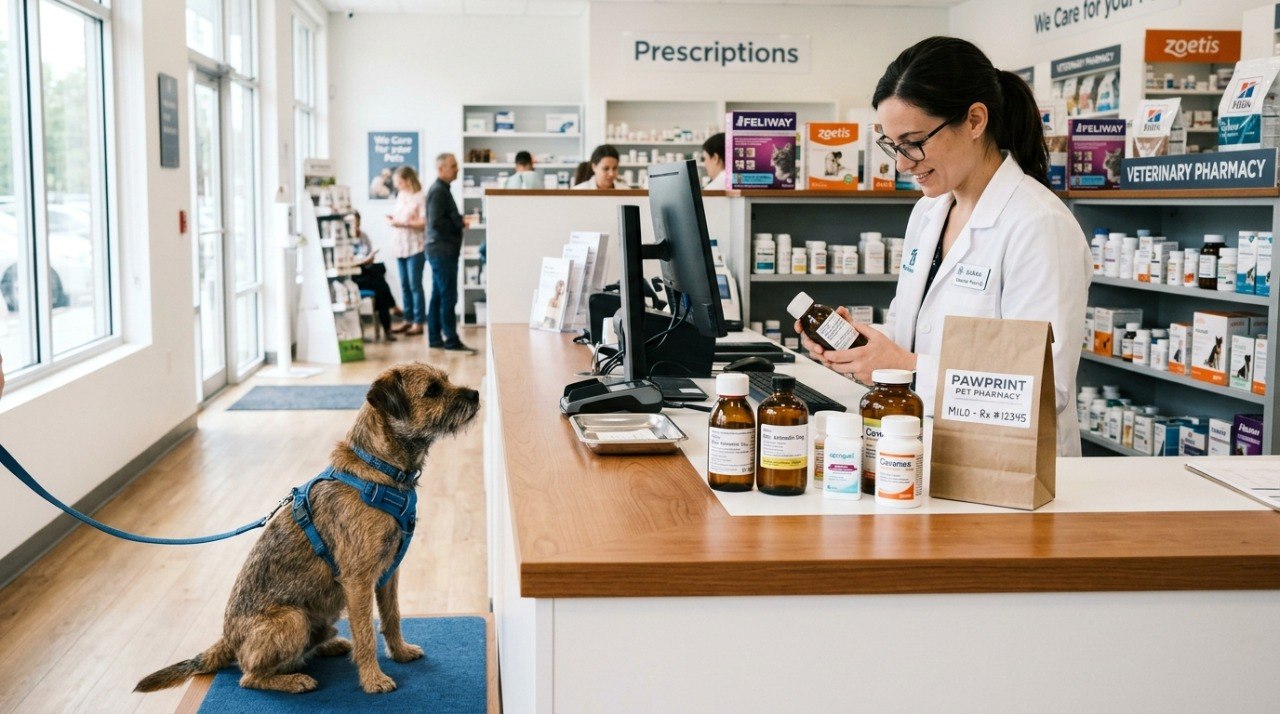
- Your veterinary clinic’s in-house pharmacy — convenient, but not always the cheapest option, especially for common human-equivalent generics.
- A retail human pharmacy — many common medications prescribed for pets (certain antibiotics, heart medications, or anti-nausea drugs) are the exact same drug used in human medicine, and can sometimes be filled at a regular pharmacy for less, with a valid prescription from your vet.
- Online veterinary pharmacies — licensed online pharmacies can offer competitive pricing and home delivery, particularly for long-term or chronic medications.
- Big-box retail pharmacies with prescription savings programs — some large retail pharmacy chains offer discount generic drug lists that can apply to pet prescriptions filled with a written script.
Ask your vet to provide a written prescription (rather than filling it in-house automatically) so you’re free to shop around. A reputable veterinarian should have no issue with this — it’s a completely standard and legal request.
Important Safety Note Before You Compare Prices
While it’s true that some medications prescribed for pets are identical to human drugs, you should never give your pet any human medication — over-the-counter or prescription — without explicit instruction from your veterinarian. Dosages differ dramatically between species and even between different sizes of pets, and some common human medications (including certain pain relievers) are toxic or even fatal to dogs and cats. Always confirm the exact medication, dosage, and formulation with your veterinarian before filling any prescription anywhere other than their own pharmacy, and never substitute a human product on your own judgment.
Comparing Prices the Right Way
| Step | What to Do |
|---|---|
| 1. Get the exact prescription details | Ask your vet for the drug name, strength, formulation, and quantity in writing |
| 2. Ask about generic availability | Confirm whether a generic version is appropriate for your pet’s condition |
| 3. Call or check online pricing at 2-3 pharmacies | Compare your vet’s pharmacy, a retail pharmacy, and a licensed online pharmacy |
| 4. Ask about discount programs or coupons | Many pharmacies and manufacturers offer pet-specific discount cards or coupons |
| 5. Factor in shipping time | Online pharmacies may be cheaper but can take days to arrive — plan refills ahead |
| 6. Confirm with your vet before switching | Make sure the new source and product match exactly what was prescribed |
Coupons and Discount Programs
Several types of savings programs can help lower your out-of-pocket cost on pet medications:
- Manufacturer rebates and coupons — pharmaceutical companies sometimes offer rebates on newer or brand-name pet medications, especially for chronic conditions.
- Pharmacy discount cards — some retail and online pharmacies offer membership-based or free discount cards that apply to pet prescriptions.
- Veterinary clinic loyalty programs — some clinics offer discounts on medications for wellness plan members or frequent clients.
- Nonprofit and community assistance programs — certain nonprofit organizations help cover medication costs for pet owners facing financial hardship, particularly for chronic or life-sustaining treatments.
It’s worth spending ten minutes searching for “[medication name] pet discount” or asking your vet’s office directly whether they know of current promotions, since these programs come and go.
Which Medications Are Good Candidates for Comparison Shopping?
Not every pet medication is a good candidate for shopping around at different pharmacies. Specialized veterinary-only formulations, certain compounded medications, and drugs with no human equivalent are typically best filled through your vet or a specialty veterinary pharmacy, since general retail pharmacies may not stock them at all. On the other hand, many everyday medications used for chronic conditions — including some heart medications, certain antibiotics, thyroid medications, and anti-nausea drugs — have direct human equivalents that a retail pharmacy can dispense with a valid prescription. This is exactly the category where shopping around tends to yield the most meaningful savings.
Common conditions where generic savings are often most impactful include:
- Hypothyroidism in dogs, often managed with a long-term daily medication that has a well-established generic form.
- Arthritis and chronic pain management, where daily or twice-daily dosing over months or years makes even small per-pill savings add up significantly.
- Allergies and skin conditions, which often require ongoing medication and sometimes specialty diets or supplements alongside prescription drugs.
- Heart disease, where multiple daily medications are common and generic options can meaningfully reduce the household’s monthly veterinary spending.
Building a Long-Term Medication Budget
For pets managing a chronic condition, medication costs are best thought of as an ongoing monthly expense rather than a one-time bill. Once your vet has settled on an effective treatment plan, take the time to research the true monthly cost across your realistic pharmacy options, factoring in both the price per dose and any recurring discount programs. Setting this up early — rather than reactively refilling at whatever pharmacy is most convenient each month — often leads to the biggest cumulative savings over a pet’s lifetime, especially for conditions that require years of consistent treatment.
It’s also worth revisiting your medication sourcing periodically. Generic availability changes over time as patents expire on newer drugs, pharmacy discount programs come and go, and your pet’s dosing needs may shift as their condition is managed or as they age. A quick annual check-in — comparing prices again even after you’ve settled into a routine — can catch new savings opportunities you might otherwise miss.
Other Ways to Reduce Medication Costs Long-Term
- Ask about larger quantities. A 90-day supply is often cheaper per dose than three separate 30-day refills.
- Request the tablet or capsule form when appropriate. Compounded liquids and chews are often more convenient but can cost significantly more than standard tablets.
- Stay current on preventive care. Managing a chronic condition well (weight control, consistent monitoring) can sometimes reduce the dose or frequency of medication needed over time.
- Review your pet insurance policy. Some pet insurance plans offer optional add-ons that cover prescription medications, which can offset costs for pets on long-term treatment.
- Avoid letting prescriptions lapse. Running out and needing an emergency refill often means paying full price without time to shop around.
Frequently Asked Questions
Are generic pet medications as effective as brand-name ones?
Yes, in the vast majority of cases. Generic medications must contain the same active ingredient, strength, and dosage form as the brand-name version and meet the same regulatory standards. Your veterinarian can confirm whether a generic is appropriate for your pet’s specific situation.
Can I really fill my pet’s prescription at a human pharmacy?
Sometimes, yes — for medications that are identical to human drugs and prescribed at an appropriate dose, a retail pharmacy can fill a valid prescription from your veterinarian. Always confirm with your vet first, since not all pet medications are available this way, and formulation or dosing may differ.
Is it safe to give my pet a human version of a medication on my own?
No. Never give your pet any human medication without explicit direction from your veterinarian, even if it seems like the “same drug.” Dosing, safety, and toxicity risks vary significantly between species and between individual pets.
Do online pet pharmacies require a prescription?
Legitimate, licensed online pharmacies will always require a valid prescription from your veterinarian before dispensing medication. Be cautious of any site that offers to sell prescription pet medication without one — that’s a red flag for an illegitimate or unsafe source.
Will my vet be upset if I ask for a written prescription instead of buying from them directly?
A reputable veterinarian should not have an issue providing a written prescription so you can shop around — it’s a standard and legal request. If a clinic is unwilling to provide one, that’s worth discussing directly with them.
How can I find discount programs for my pet’s specific medication?
Start by asking your veterinarian’s office, then search online for the medication name plus “discount” or “coupon,” and check whether your pharmacy or pet insurance provider offers a prescription savings program.
Disclaimer: This article is for general informational purposes only and does not constitute veterinary or medical advice. Never give your pet any human medication, over-the-counter drug, or supplement without explicit guidance from a licensed veterinarian. Always consult your veterinarian before changing medications, pharmacies, or dosing for your pet.
Want the full picture on affording vet care? See our Affording Vet Care guide for more.