
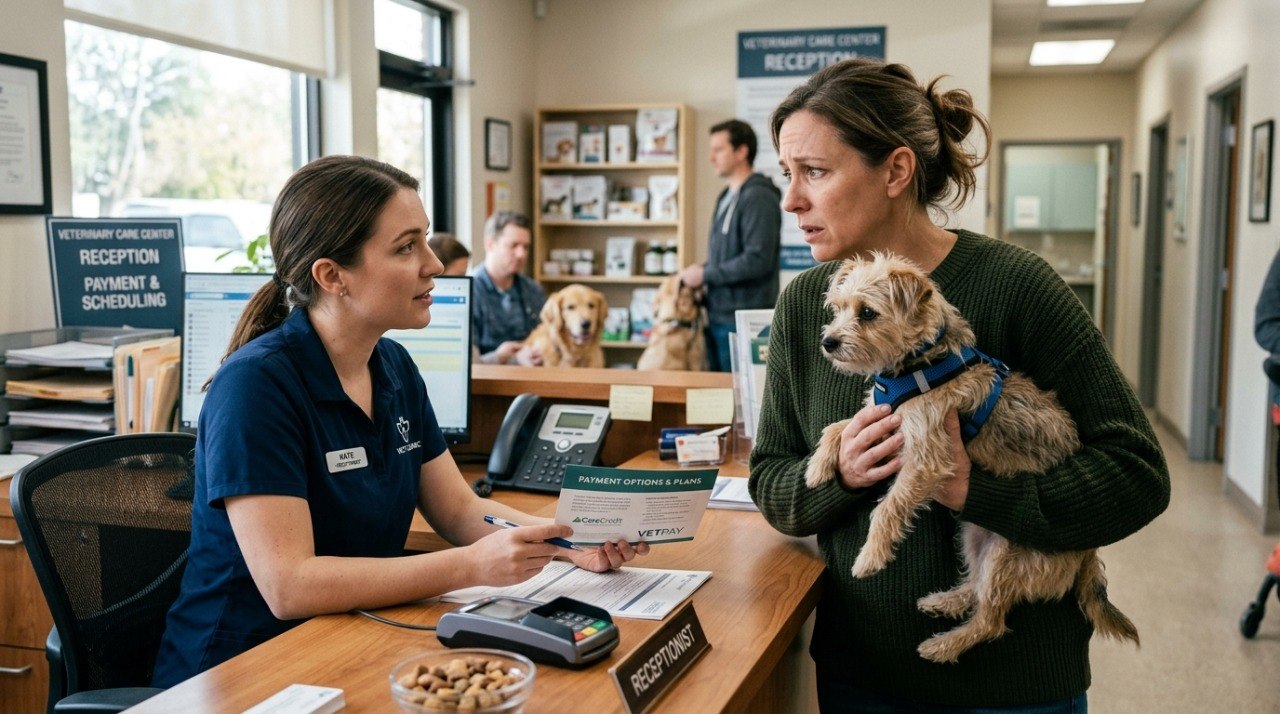
How to Pay for Emergency Vet Bills When You Can’t Afford It
If you’re staring at an emergency vet estimate and thinking, “I can’t afford this vet bill,” you are not alone — and you are not a bad pet owner. Thousands of pet parents face this exact moment every day, torn between their animal’s urgent medical needs and a bank account that simply can’t stretch that far. The good news is that there are real, workable options, and this guide walks through them in order of how quickly you can actually put them to use.
What To Do First If You Can’t Afford a Vet Bill
Before you panic or walk away from care, talk to the front desk. Veterinary staff see financial stress every single day, and most clinics would rather work out a solution than watch a patient go untreated. Ask directly: “I can’t afford this vet bill in full right now — what options do you offer?” That one sentence often opens doors that aren’t advertised on the clinic’s website. Below are the most common paths pet owners use, roughly ordered from fastest to arrange to slowest.
1. Ask About an In-House Payment Plan
Some independent veterinary clinics, especially smaller practices, will let you split a bill into installments paid directly to them, sometimes with no interest if you commit to a short timeline.
- Pros: No credit check in many cases, fast to set up, keeps the relationship simple, may be interest-free.
- Cons: Not every clinic offers this, and some require a deposit or proof of steady income before agreeing.
2. Medical Credit Cards (CareCredit, Scratchpay, and Similar)
Cards and financing apps built specifically for medical and veterinary expenses can often approve you within minutes, right at the front desk or on your phone in the waiting room.
- Pros: Same-day approval is common, funds go straight to the clinic, promotional zero-interest windows are frequently available.
- Cons: Interest rates jump sharply if the balance isn’t paid off within the promotional period, and approval still depends on credit history.
3. Personal Loans or Online Lenders
Online personal loan companies and some credit unions offer unsecured loans that can be funded within a day or two, which can help when a clinic doesn’t accept medical credit cards.
- Pros: Fixed monthly payments, funds can be used for follow-up care too, credit unions often have friendlier rates than payday-style lenders.
- Cons: Approval and funding usually aren’t instant, and interest rates vary widely depending on your credit score.
4. Nonprofit Financial Assistance Organizations
A number of nonprofits exist specifically to help pet owners who can’t afford vet bills, particularly for emergencies or life-threatening conditions. Organizations like RedRover, The Pet Fund, and the Brown Dog Foundation are examples of the type of charitable groups that offer grants toward veterinary care, though eligibility criteria, funding availability, and application timelines vary and should always be confirmed directly with each organization.
- Pros: Grant money doesn’t need to be repaid, and many organizations focus specifically on emergency or life-saving treatment.
- Cons: Applications can take time to process, funding is limited and not guaranteed, and many programs have strict eligibility rules or waitlists.
5. Crowdfunding
Platforms built for medical fundraising, as well as general crowdfunding sites, are commonly used by pet owners to rally friends, family, and even strangers to help cover an emergency bill.
- Pros: No repayment required, can be shared instantly on social media, sometimes raises funds faster than expected.
- Cons: Results are unpredictable, it takes time to gain traction, and platform fees typically reduce the total amount you receive.
6. Negotiate Directly With the Clinic
It’s worth asking whether the treatment plan can be adjusted. Vets often present a “gold standard” estimate first, but there may be a more conservative, less expensive approach that still gives your pet a good outcome.
- Pros: Can meaningfully lower the total bill, costs nothing to ask, builds a collaborative relationship with your vet team.
- Cons: Not always possible depending on the diagnosis, and some conditions genuinely require the more expensive route for your pet’s safety.
7. Low-Cost Clinics and Veterinary School Hospitals
If the situation isn’t an immediate emergency, a low-cost clinic or a teaching hospital at a veterinary school may offer the same procedure for meaningfully less than a full-service emergency hospital.
- Pros: Significantly reduced costs, students and residents are closely supervised by licensed veterinarians.
- Cons: Appointments may not be available same-day, and true emergencies generally still need immediate ER care first.
How to Talk to Your Vet About Money Without Feeling Embarrassed
A lot of pet owners delay the conversation about cost because they feel ashamed, as if needing financial help reflects poorly on how much they love their animal. It doesn’t. Veterinary teams bring up cost with clients constantly, and most have a mental list of resources they can point you toward the moment you say the words out loud. Being specific helps: instead of a vague “this is expensive,” try “I can’t afford this vet bill as quoted — can we talk about a payment plan, a less costly treatment option, or other resources you’d recommend?” That framing signals you’re not asking them to provide free care, just to help you find a path that works.
It also helps to ask for an itemized estimate in writing before treatment begins, if your pet’s condition allows for that pause. An itemized breakdown makes it much easier to spot which line items are optional, which are negotiable, and which are truly non-negotiable for your pet’s safety. Many clinics will happily walk through the estimate with you and flag lower-cost alternatives for individual items, such as generic medications instead of brand-name ones, or in-house bloodwork instead of an outside lab with faster turnaround but a higher price tag.
Building a Safety Net So This Is Easier Next Time
Once the current bill is handled, it’s worth thinking about how to avoid being caught in the same position again. This isn’t about judgment — emergencies are, by definition, unplanned — but a little preparation can make the next unexpected vet bill far less stressful.
- Start a small dedicated pet emergency fund. Even setting aside a modest amount from each paycheck into a separate savings account adds up over time and gives you a cushion before you need financing at all.
- Look into pet insurance while your pet is healthy. Coverage is typically far more comprehensive, and premiums are typically lower, when a policy is purchased before any symptoms or diagnoses exist, since pre-existing conditions are usually excluded from coverage.
- Keep a medical credit card open even after the emergency passes. Cards like CareCredit remain useful for future visits, and having one already approved can save precious time during the next urgent situation.
- Ask your regular vet about wellness plans. Some clinics offer monthly wellness memberships that bundle routine care at a discount, which can catch problems earlier and potentially reduce the odds of a major emergency down the road.
If you genuinely can’t afford a vet bill, the worst move is disappearing without a conversation. Clinics can only work with you if they know what’s going on. Combining two or three of these options — for example, a short payment plan from the clinic plus a small personal loan, or a medical credit card plus a nonprofit grant application — is common and often makes the total feel far more manageable than tackling it as one lump sum.
Frequently Asked Questions
What should I do if my pet needs emergency surgery and I have no savings?
Start by asking the emergency clinic about payment plans and medical credit options on the spot, since approval for cards like CareCredit or Scratchpay can happen within minutes. At the same time, look into nonprofit organizations that fund emergency veterinary care, since some can move quickly for life-threatening situations.
Will a vet turn my pet away if I can’t afford the bill?
Policies vary by clinic. Many veterinary hospitals will stabilize a pet in a true emergency regardless of ability to pay, but they are not required to provide full treatment for free. This is exactly why discussing payment options immediately is so important.
Can I use a medical credit card for a routine vet visit too?
Yes. Cards like CareCredit and financing apps like Scratchpay can typically be used for both emergency and routine veterinary care, as long as the provider accepts that payment method.
Do nonprofit vet assistance programs actually cover full costs?
Rarely in full. Most nonprofit grants cover a portion of the bill rather than the entire amount, and they’re usually reserved for emergency or life-threatening situations rather than routine care.
Is it better to ask for a payment plan or take out a loan?
It depends on your situation. A clinic payment plan is often simpler and may carry no interest, while a personal loan can offer more flexibility and a longer repayment window. Comparing the total cost of each option before committing is the safest approach.
This article is for general informational purposes only and is not financial advice. Interest rates, approval requirements, and program availability change over time and vary by provider and location, so confirm current terms directly with the lender, clinic, or organization before applying. If your pet is experiencing a life-threatening emergency, contact the nearest emergency veterinary clinic first and ask about payment options once your pet is being seen.
Want the full picture on affording vet care? See our Affording Vet Care guide for more.