
Pet Telehealth: When It Saves Money
Not every worrying symptom or follow-up question requires piling your pet into the car and sitting in a waiting room. Pet telehealth cost is typically far lower than an in-person visit, which makes virtual veterinary consultations an appealing option for minor concerns, follow-ups, and quick guidance. Understanding when telehealth genuinely saves you money — and when it simply isn’t appropriate — can help you use this tool wisely without compromising your pet’s health.
What Is Pet Telehealth?
Pet telehealth refers to veterinary consultations conducted remotely, usually via video call, phone, or secure messaging, rather than in person at a clinic. Some services connect you with your own regular veterinarian for a virtual follow-up, while others are standalone platforms that connect pet owners with a licensed veterinarian they haven’t met before. The specifics of what a telehealth vet can legally do vary by state, since many places require an existing veterinarian-client-patient relationship (VCPR) before a vet can diagnose or prescribe medication remotely.
When Telehealth Actually Saves You Money
The clearest financial win with pet telehealth comes from avoiding unnecessary trips for issues that don’t require hands-on examination or lab work. Good candidates for a virtual visit include:
- Minor behavioral questions — such as changes in appetite, mild anxiety, or new habits that aren’t accompanied by other red-flag symptoms.
- Follow-up check-ins — for example, confirming that a pet is recovering well after a procedure, checking in on medication side effects, or reviewing whether a treatment plan is working.
- Triage and guidance — helping you decide whether a symptom needs an urgent in-person visit, a routine appointment, or can be monitored at home a bit longer.
- Second opinions — getting another veterinarian’s perspective on a diagnosis or treatment plan before committing to an expensive procedure, without paying for a full duplicate exam.
- Medication refill questions or general nutrition and wellness guidance for a pet with a stable, known condition.
In these situations, a telehealth call can resolve the issue, save you a copay-equivalent office visit fee, and save you the time cost of transporting and waiting with an anxious pet — all while still getting professional input.
When Telehealth Is NOT a Substitute for an In-Person Visit
Telehealth has real limits, and using it in the wrong situation can delay necessary care or, in the worst cases, put your pet at risk. Virtual consultations cannot replace an in-person visit when:
- It’s a true emergency — difficulty breathing, uncontrolled bleeding, suspected poisoning, collapse, bloat, seizures, or any situation where minutes matter.
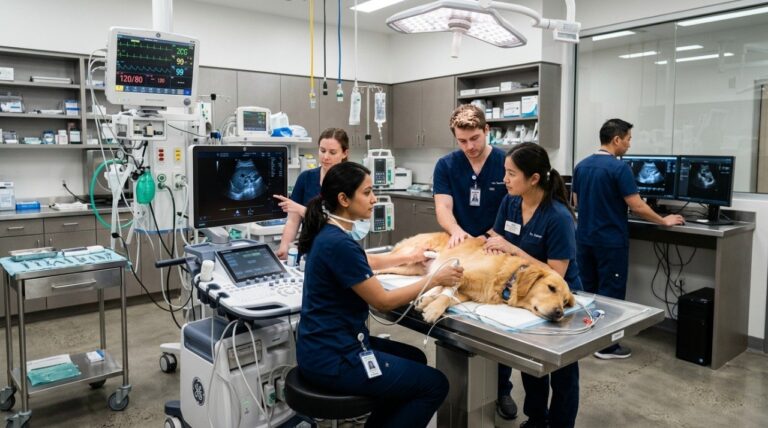
- Your pet needs a hands-on physical exam — palpating the abdomen, listening to the heart and lungs, checking for pain response, or examining a wound in detail all require a vet’s hands and instruments.
- Diagnostic testing is needed — bloodwork, X-rays, ultrasound, urinalysis, or biopsies cannot be performed remotely.
- Surgery or any procedure is required — obviously, no surgical or dental procedure can be done over video.
- A new prescription requires an established VCPR — many states legally prohibit a vet from prescribing medication to a pet they’ve never physically examined.
If a telehealth vet reviews your description of symptoms and recommends an in-person visit, that’s the system working as intended — it’s a sign the platform is prioritizing your pet’s safety over convenience.
Telehealth vs. In-Person Visit: Cost Comparison
| Factor | Telehealth Consultation | In-Person Visit |
|---|---|---|
| Typical cost range | Generally lower — often a flat consultation fee | Higher, especially once exam fees, tests, and treatment are added |
| Travel and time cost | None — done from home | Travel time, waiting room time, time off work |
| Physical examination | Not possible | Full hands-on exam available |
| Diagnostic testing | Not available directly (may be arranged as a follow-up) | Available on-site (bloodwork, imaging, etc.) |
| Best for | Minor concerns, follow-ups, triage, second opinions | New symptoms, emergencies, anything requiring exam or tests |
| Prescription authority | Limited by state law and existing vet relationship | Full prescribing ability after exam |
While exact numbers vary by platform, provider, and region, pet telehealth consultations are typically priced well below a standard in-person office visit fee, and considerably below the cost of an in-person visit that also includes diagnostics or treatment. The real savings, though, often come less from the price of the call itself and more from avoiding an unnecessary trip altogether when a virtual check-in is enough to resolve the concern.
Types of Pet Telehealth Platforms
Pet telehealth today generally falls into a few broad categories:
- Your existing vet’s own telehealth option — many general practices now offer virtual follow-ups or triage calls for established patients, often at a reduced fee compared to an office visit.
- Standalone telehealth apps and services — subscription or pay-per-call platforms that connect you with a licensed veterinarian for general guidance, symptom triage, and behavioral or nutrition questions.
- Pet insurance-bundled telehealth — some pet insurance providers include free or discounted telehealth access as a policy perk, which can make it essentially free to use for eligible questions.
- Text-based or asynchronous consultation services — where you submit photos, videos, or a written description and receive guidance without a live video call, often at a lower cost than a real-time consultation.
Whichever type you choose, confirm the veterinarian is licensed in your state, ask what the service can and cannot do (including whether they can prescribe medication), and always disclose your pet’s full history so the recommendation is well-informed.
How Telehealth Fits Into Your Overall Vet Care Strategy
The smartest way to think about pet telehealth cost savings is as one tool in a broader toolkit rather than a replacement for your regular veterinarian relationship. Pets still need annual or biannual wellness exams, vaccinations, and hands-on physical checks that only an in-person visit can provide. Telehealth works best when layered on top of that foundation — filling the gaps between scheduled visits with quick guidance, reducing unnecessary trips for things that turn out to be minor, and giving you a fast way to get professional input when you’re simply unsure whether something warrants a same-day appointment.
Many veterinarians now actively encourage established clients to reach out virtually first when a non-urgent question comes up, precisely because it helps them triage more effectively and keeps their in-person schedule available for pets who truly need to be seen. This shift benefits both sides: clinics can manage caseloads more efficiently, and pet owners save money and time on visits that don’t turn out to be necessary.
Common Telehealth Use Cases and Their Approximate Value
| Situation | Why Telehealth Adds Value |
|---|---|
| Mild digestive upset with no other symptoms | A vet can advise on diet changes and monitoring before deciding if an in-person visit is needed |
| Post-surgery recovery check | Visual inspection of an incision via video can confirm normal healing without a repeat office visit |
| New pet owner questions | General guidance on diet, parasite prevention, and normal behavior doesn’t require an exam |
| Chronic condition medication questions | Clarifying dosing or side effects for an already-diagnosed, stable condition |
| Deciding if a symptom is urgent | A quick triage call can determine whether to head to an ER or monitor at home overnight |
Limitations Pet Owners Often Underestimate
Even pet owners who understand the basic pros and cons of telehealth sometimes underestimate a few of its limitations. Skin conditions, for example, can be genuinely difficult to assess accurately over video, since lighting, camera quality, and a pet’s fur can obscure important details that a vet would easily catch by touch and close inspection in person. Similarly, subtle changes in gait, muscle tone, or pain response often require hands-on palpation to detect accurately. If a telehealth visit ever leaves you with lingering uncertainty, that’s a reasonable signal to book an in-person follow-up rather than continuing to rely on remote assessments for an unresolved concern.
Tips for Getting the Most Value Out of Telehealth
- Have good lighting and a calm environment so the vet can clearly see your pet during video calls.
- Take photos or short videos of the symptom in advance (a limp, a rash, unusual behavior) — this is often more useful than trying to demonstrate it live.
- Write down your pet’s recent history, current medications, and specific questions before the call to avoid wasting time.
- Ask directly: “Based on what I’m describing, do you think this needs an in-person exam?” A good telehealth vet will tell you honestly.
- Use telehealth as a triage step, not a final answer, for anything that feels serious or is getting worse.
Frequently Asked Questions
Is pet telehealth cheaper than a regular vet visit?
Generally, yes — a telehealth consultation typically costs less than an in-person office visit, and it also saves you the time and travel involved in going to a clinic. However, if the telehealth call leads to a recommendation for in-person testing or treatment, you’ll still incur those additional costs.
Can a telehealth vet prescribe medication for my pet?
It depends on your state’s laws and whether you already have an established relationship with that veterinarian. Many states require a vet to have physically examined your pet before prescribing, which limits what telehealth-only providers can do for new patients.
What symptoms should never be handled through telehealth alone?
Anything suggesting an emergency — difficulty breathing, collapse, severe bleeding, suspected toxin ingestion, repeated vomiting, a bloated or painful abdomen, or seizures — should go straight to an in-person or emergency vet, not a virtual call.
Does pet insurance cover telehealth consultations?
Some pet insurance plans include telehealth access as a built-in perk or reimburse telehealth consultation fees like any other veterinary expense. Check your specific policy, since coverage varies by provider.
Can I use pet telehealth for a second opinion on an expensive treatment plan?
Yes, this is one of the most cost-effective uses of telehealth. You can share your pet’s diagnosis, test results, and proposed treatment plan with another licensed veterinarian to confirm the recommendation before committing to a costly procedure.
Do I need special equipment to use pet telehealth?
No — most platforms only require a smartphone, tablet, or computer with a camera and a stable internet connection. Some services also accept photos or videos submitted ahead of time instead of a live call.
Disclaimer: This article is for general informational purposes only and is not a substitute for professional veterinary advice, diagnosis, or treatment. Telehealth availability, services, and pricing vary by provider, platform, and state regulations. Always seek immediate in-person or emergency veterinary care for urgent or worsening symptoms, and consult a licensed veterinarian to determine the most appropriate care for your pet.
Want the full picture on affording vet care? See our Affording Vet Care guide for more.