Vet Payment Plans: What Clinics Offer and How to Ask
Staring at a vet bill you weren’t expecting is stressful enough without also feeling like you have to choose between your pet’s health and your rent. If your clinic has mentioned a payment plan, or you’ve wondered whether one even exists, you’re not alone — thousands of pet owners ask the same question every month. This guide breaks down exactly what vet payment plans look like, who offers them, and how to ask for one without feeling awkward.
What Are Vet Payment Plans?
Vet payment plans are arrangements that let you pay for veterinary care over time instead of all at once, at the moment of service. Instead of handing over a full balance of $800 or $3,000 on the spot, you pay a portion up front and the rest in scheduled installments — weekly, biweekly, or monthly, depending on the arrangement. The goal is simple: make necessary or emergency care accessible without forcing owners to delay treatment or make impossible financial choices.
It’s important to understand that “payment plan” isn’t one single product. It can mean very different things depending on who is offering it — the clinic itself, a third-party financing company, or a hybrid of both. Knowing the difference matters because the terms, interest rates, and approval requirements vary widely.
Types of Vet Payment Plans: In-House vs. Third-Party
In-House Payment Plans
Some veterinary clinics — usually independently owned practices with an established relationship with regular clients — offer in-house payment plans. This means the clinic itself agrees to let you pay off the balance directly to them over a set period, often without involving a bank or lender.
In-house plans are relatively rare today because they tie up the clinic’s own cash flow and carry collection risk, but they still exist, especially for long-term clients in good standing. Terms are usually informal: a signed agreement, often a down payment, and a short repayment window. Some clinics charge no interest at all; others add a modest service fee.
Third-Party Veterinary Financing
Most clinics that advertise “payment plans” are actually pointing you toward third-party financing companies that specialize in medical or veterinary credit. These include revolving credit lines (you apply once and can use the credit repeatedly, similar to a store credit card) and installment loan products (a fixed amount borrowed for a specific vet bill, repaid over a set term).
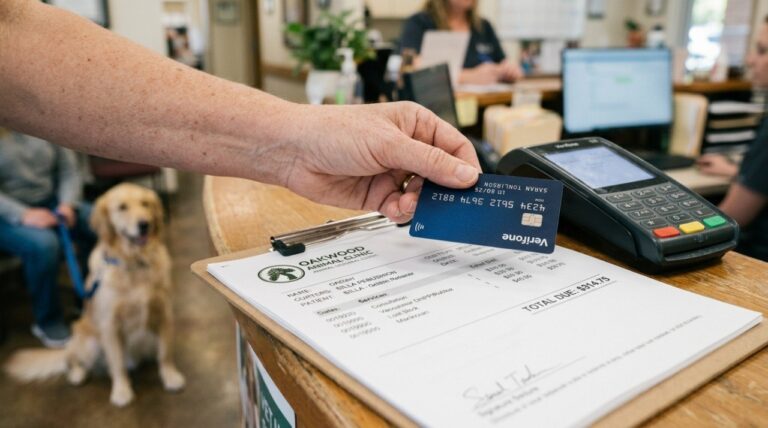
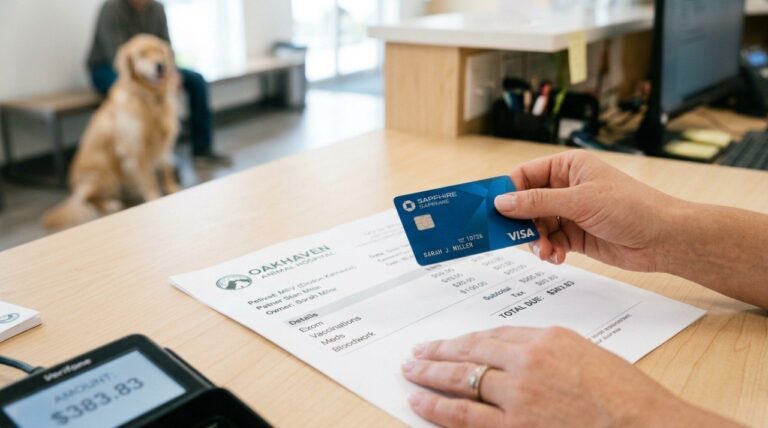
With third-party financing, the clinic gets paid in full immediately by the lender, and you repay the lender according to the agreed terms. Approval is usually fast — often within minutes — but interest rates can range from promotional 0% (if paid in full within the promotional window) up to the lender’s much higher standard APR if you miss that window or carry a balance longer.
Pet Insurance Reimbursement as a Bridge
Technically not a “payment plan,” but worth mentioning: if you have pet insurance, some clinics will let you pay the bill and simply wait for your reimbursement check, while others partner with services that let insurance pay the clinic more directly. This isn’t a loan, but it functions similarly by spreading out when money leaves your pocket versus when the clinic gets paid.
Comparing Vet Payment Plan Options
| Plan Type | Typical Terms | Pros | Cons |
|---|---|---|---|
| In-house clinic plan | Short term; often a down payment | No credit check often; personal relationship; sometimes interest-free | Rare; only for established clients; can strain the relationship if you fall behind |
| Third-party revolving credit | Promotional 0% for 6–24 months, then 25–30% APR | Fast approval; reusable for future bills; widely accepted | High penalty interest if not paid off in time; requires credit check |
| Third-party installment loan | Fixed term, fixed monthly payment | Predictable payments; clear payoff date | Interest from day one in many cases; credit check required |
| Pet insurance reimbursement | Pay upfront, reimbursed in 1–3 weeks typically | No interest; you get your own money back | You still need cash upfront; doesn’t help if you have no insurance yet |
How to Ask Your Vet for a Payment Plan
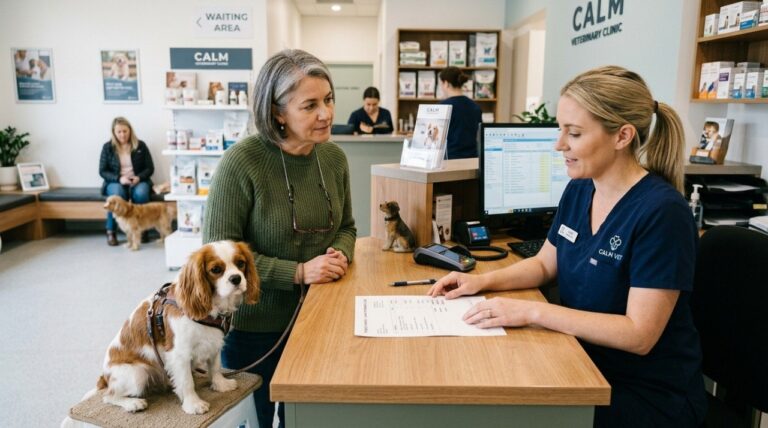
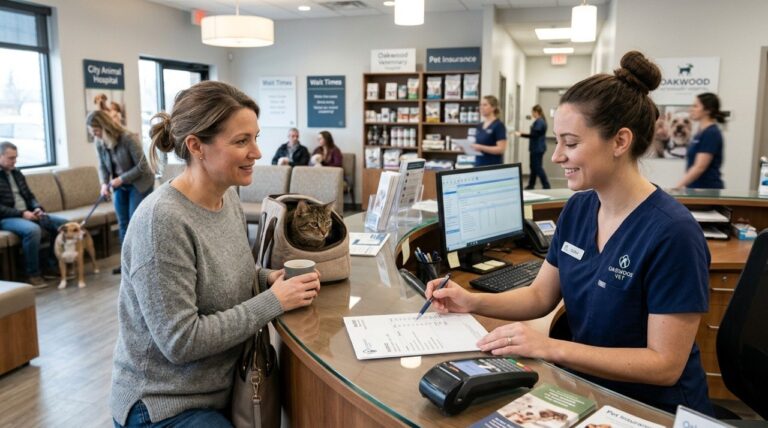
Asking for help with a bill can feel uncomfortable, but veterinary staff deal with this conversation constantly — you won’t be the first client to ask, and you won’t be judged for it. Here’s how to approach it:
- Ask early, not after the bill is finalized. If you know a procedure is coming (surgery, dental work, a diagnosis requiring ongoing treatment), ask about payment options during the estimate conversation, not after the invoice prints.
- Be direct and specific. Try: “I want to move forward with this treatment, but I’d like to understand what payment plan options are available so I can budget for it.” This signals you’re not asking to skip payment — you’re asking to structure it.
- Ask if the clinic has an in-house option first. It’s less common, but costs you nothing to ask, and it may come with better terms than a financing company.
- Request the full breakdown of the estimate. Ask which parts of the treatment are essential now versus what could be safely delayed, so you know the true minimum needed today.
- Ask about a partial payment today with the balance due later, even informally — some practices will work out a two-payment split without needing a third-party lender at all.
Questions to Ask Before You Accept Any Vet Payment Plan
Before signing anything, slow down enough to ask these questions — a rushed decision at the front desk can cost you hundreds of dollars in avoidable interest.
- What is the actual APR after any promotional period ends? Many third-party plans advertise “0% interest” but apply deferred interest retroactively to the entire original balance if you don’t pay it off in full by the deadline.
- Is this deferred interest or simple interest? Deferred interest plans can be far more expensive if you’re even one payment short of the payoff date.
- What happens if I miss a payment? Ask about late fees, penalty APRs, and whether a missed payment is reported to credit bureaus.
- Is there a prepayment penalty? You want to be able to pay it off early without being charged extra.
- Does this involve a hard credit check? A hard inquiry can temporarily affect your credit score; some plans use only a soft check.
- Can I use this plan again at a future visit, or is it a one-time loan? Revolving credit lines can be reused; installment loans typically cannot.
Reading the fine print on any vet payment plan is not optional — it’s the single biggest factor in whether the plan saves you money or quietly costs you more than the original bill.
Red Flags to Watch for in Vet Payment Plans
Not every payment plan is designed with your best interest in mind, and a little skepticism at the signing table can save you real money down the road. Watch for these warning signs before you commit to any plan, whether it’s offered by the clinic directly or by an outside financing company.
- Pressure to sign immediately. A legitimate payment plan doesn’t require an on-the-spot decision without time to read the terms. If you’re being rushed, ask for a printed copy of the agreement to review at home, even for a few minutes in the parking lot.
- Vague or verbal-only terms. Any real payment plan should come with a written agreement specifying the amount, schedule, interest (if any), and consequences of a missed payment. If staff can’t produce this in writing, treat that as a red flag.
- No clear explanation of what happens on default. Ask specifically what happens if you miss two consecutive payments — some in-house arrangements can escalate quickly to collections without much warning.
- Stacking multiple financing products. Be cautious about opening more than one line of vet-related credit at the same time; multiple hard inquiries and overlapping payments can strain your budget in ways that are hard to unwind.
Building Payment Flexibility Into Future Vet Visits
If this is the first time you’ve needed a vet payment plan, it’s worth thinking beyond the current bill. Ask your regular vet, at your next routine visit, what their standard policy is for larger, unplanned expenses — before you’re in a stressful moment trying to figure it out. Some clinics will proactively enroll long-term clients in a financing pre-approval so that, if an emergency does happen, the application step is already done.
It’s also worth pairing a payment plan strategy with a small ongoing savings habit. Even setting aside a modest amount each month specifically for veterinary costs reduces how much you’ll need to finance next time, and can shift you from paying interest to simply topping up your own reserve when a bill arrives. Many owners use a combination approach: a small emergency fund for the first portion of a bill, and a payment plan or financing product only for the remaining balance, which keeps overall borrowing costs much lower than financing the entire amount.
Frequently Asked Questions About Vet Payment Plans
Do all veterinary clinics offer payment plans?
No. Payment plan availability varies widely by clinic, location, and ownership structure. Corporate-owned clinics are more likely to point you to a third-party financing partner, while independent clinics may occasionally offer in-house arrangements to established clients. Always ask directly — it’s never listed on every clinic’s website even when it’s available.
Will a vet payment plan hurt my credit score?
It depends on the type. Third-party financing usually requires a credit application, and approval may involve a hard inquiry, which can cause a small, temporary dip in your score. In-house clinic arrangements typically don’t involve credit reporting at all unless you default and the balance goes to collections.
What if I’m denied for third-party financing?
If you’re declined, ask the clinic directly about alternative options: a smaller in-house partial-payment arrangement, a reduced treatment plan focused on immediate needs, or a referral to nonprofit organizations and local assistance funds that help cover emergency vet costs.
Are vet payment plans better than a personal loan or credit card?
It depends on your interest rate and repayment discipline. A 0% promotional plan you can pay off within the window is often cheaper than a credit card. But if you’re likely to carry a balance past the promotional period, compare the eventual APR against a personal loan or an existing low-interest credit card before committing.
Can I negotiate the terms of a payment plan?
With in-house plans, yes — terms are often flexible and personal. With third-party financing companies, terms are generally fixed and non-negotiable, though you may be able to choose between different repayment lengths at the time of application.
What should I do if I can’t make a payment on time?
Contact the clinic or lender before the due date, not after. Many are willing to adjust a due date or set up a short grace period if you communicate proactively, whereas silence often triggers late fees or collections referrals.
This article is for general informational purposes only and does not constitute financial or veterinary advice. Vet payment plan terms, interest rates, and availability change frequently and vary by clinic and lender. Always confirm current terms, fees, and eligibility directly with your veterinary clinic or the financing provider before making a decision.
Want the full picture on affording vet care? See our Affording Vet Care guide for more.