How Much Does Dog ACLSurgery Cost? TPLO, TTA andLateral Suture Prices
Quick answer: Dog ACL surgery usually costs between about $1,000 and $10,000 per knee, and most owners land in the $3,500–$6,500 range. The exact price depends mostly on the technique, the size of your dog, the type of clinic and where you live. Lateral suture repair is the cheapest option, while TPLO and TTA cost more because they involve cutting and reshaping bone.
Dog ACL Surgery Cost by Technique
| Surgery | Typical cost per knee | Usually chosen for |
|---|---|---|
| Lateral suture (extracapsular repair) | $1,000–$3,000 | Smaller, less active dogs |
| TTA (tibial tuberosity advancement) | $2,800–$5,500 | Medium and large dogs |
| TPLO (tibial plateau leveling osteotomy) | $3,500–$6,500 | Medium, large and very active dogs |
| Both knees, TPLO | $7,000–$13,000 | Dogs with tears in both knees |
These are ranges gathered from several 2025–2026 cost guides, and they don’t always agree. Some sources put TPLO as low as $2,000–$3,500 at an experienced general practice and as high as $8,000–$10,000 at big-city specialty hospitals. Treat the table as a starting point and get a written estimate from your own vet.
Is It an ACL or a CCL?
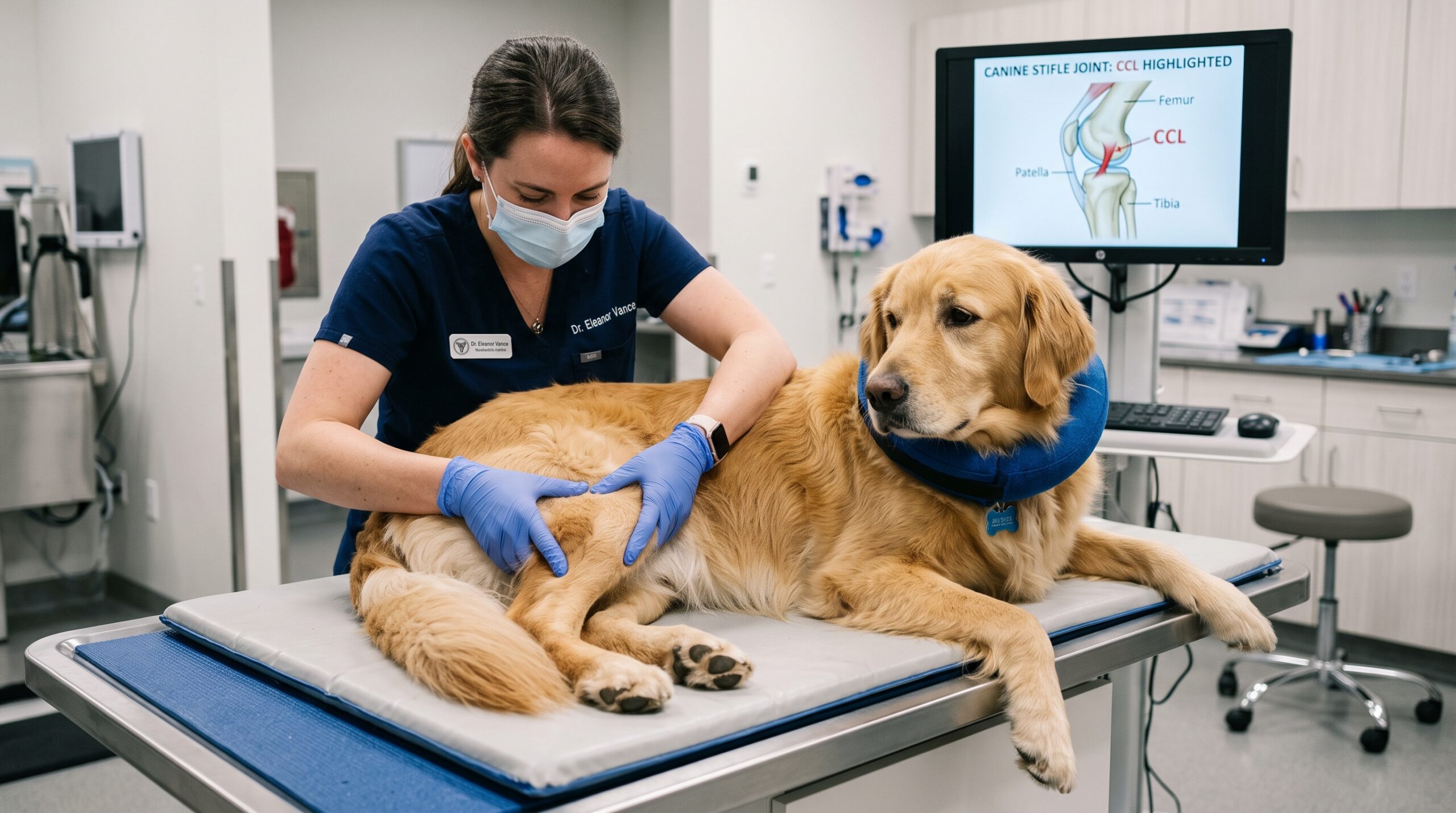
Dogs don’t technically have an ACL. The matching structure in a dog’s knee is the cranial cruciate ligament, or CCL. It does the same job as the human ACL: it keeps the knee stable when your dog walks, runs and jumps. Most people say “dog ACL” when they search, and vets use both terms, so you’ll hear either one.
A torn CCL is among the most common orthopedic injuries in dogs. It usually causes limping on a back leg, stiffness after rest and reluctance to jump or climb stairs. Only your veterinarian can confirm a tear, usually with an exam and X-rays.
The Three Main Surgeries and What They Cost
Lateral Suture Repair: $1,000–$3,000
In a lateral suture repair (also called extracapsular repair), the surgeon places a strong synthetic suture outside the joint to mimic the torn ligament while scar tissue builds up and stabilizes the knee. It is the least invasive of the three and the least expensive.
Vets generally reserve it for smaller and less active dogs, often those under roughly 30–35 pounds, because the suture can struggle to hold up under the force of a big, energetic dog. The price is lower, but the right choice depends on your dog’s weight, age and activity, not on cost alone.
TPLO: $3,500–$6,500 (More in Some Cities)
TPLO stands for tibial plateau leveling osteotomy. The surgeon cuts the top of the shin bone, rotates it to change the angle of the joint and fixes it with a metal plate and screws. The knee becomes stable without relying on the ligament.
TPLO is widely used for medium and large dogs and for active dogs, and it’s the procedure most often quoted online. It costs more because it needs specialized equipment, implants, a longer surgery and follow-up X-rays to check bone healing. Larger dogs need bigger implants and more anesthesia time, which raises the bill.
TTA: $2,800–$5,500
TTA stands for tibial tuberosity advancement. The surgeon cuts the front part of the shin bone and moves it forward, then holds it in place with an implant, so the forces in the knee no longer push the joint out of position.
TTA is also a bone surgery and generally prices in the same neighborhood as TPLO, sometimes a little lower. Which one is better for your dog depends on your dog’s anatomy and your surgeon’s experience. Ask your vet why they recommend one over the other.
What the Quote Includes (and What It Often Leaves Out)
The surgery line item is only part of what you’ll pay. A quote may cover the operation, anesthesia and implants, but leave out several extras that add up quickly.
| Cost item | Typical range |
|---|---|
| Exam, sedation and X-rays to diagnose the tear | $270–$600 |
| Pre-surgical bloodwork | $100–$200 |
| Surgery itself (see table above) | $1,000–$6,500 |
| Pain medication, antibiotics and rechecks | $50–$300 |
| Follow-up X-rays | $100–$400 |
| Physical rehabilitation | $500–$2,000 |
Add it up and a standard TPLO with normal before-and-after care commonly lands between $4,500 and $8,500 at most U.S. clinics. Ask for an itemized estimate so you can see exactly what is and isn’t included.
Three Example Total Bills
These examples are illustrative, built from the typical ranges above. They show how the same injury can produce very different final bills.
| Scenario | Surgery | Diagnostics | Meds and rechecks | Rehab | Total |
|---|---|---|---|---|---|
| 20 lb dog, lateral suture | $1,800 | $450 | $150 | $500 | $2,900 |
| 60 lb Labrador, TPLO at a general practice | $4,200 | $450 | $300 | $1,200 | $6,150 |
| 60 lb Labrador, TPLO at a big-city specialty hospital | $7,000 | $600 | $300 | $1,500 | $9,400 |
What Affects the Price of ACL Surgery
- Who performs it. Board-certified veterinary surgeons at specialty hospitals typically charge more than general practice vets who perform the same procedure. They also handle more complex cases, and many owners consider that worth the difference. Ask about your surgeon’s experience with the exact procedure.
- Where you live. Prices in large metro areas can be much higher than in small towns. Vet costs vary by roughly 50% across states, so the same operation can cost thousands more depending on your zip code.
- Your dog’s size. Bigger dogs need larger implants, more anesthesia and longer surgery time.
- Complications. Infection, implant problems or slow healing can lead to extra visits or a second surgery, sometimes costing several thousand dollars more.
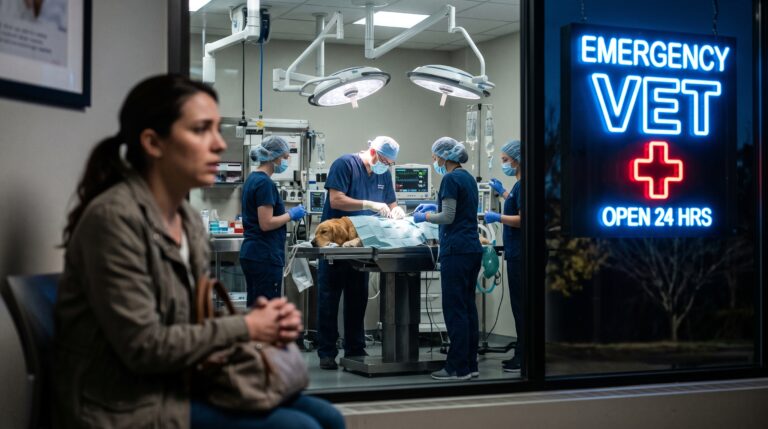
- The clinic type. Emergency and specialty hospitals charge more than a regular practice, but they may include imaging, overnight monitoring and rehab on site.
What If Both Knees Need Surgery?
Dogs that tear one CCL often develop problems in the other knee. Estimates commonly cited by vet cost guides suggest that a large share of dogs, around half, injure the opposite knee within a year or two. Budget for the possibility. A bilateral TPLO, doing both knees, typically costs $7,000–$13,000 in total, and some surgeons will operate on both in one procedure to reduce the total anesthesia and hospital time. Your vet can tell you whether that makes sense for your dog.
Does Pet Insurance Cover ACL Surgery?
It can, but only if you buy the policy before the injury happens. Most insurers treat a torn CCL as a pre-existing condition if the problem appeared before coverage started or during the waiting period. Many policies also treat the second knee as related to the first, so a claim for one knee may not lead to coverage for the other.
If you already have a policy with a reasonable reimbursement rate, a covered ACL surgery can save you thousands. Read the exclusions carefully and ask about cruciate and knee clauses. For more, see our guides to [pet insurance pre-existing conditions] and [is pet insurance worth it].
How to Lower the Cost of Dog ACL Surgery
- Get at least two written estimates. Ask each clinic to itemize the surgery, X-rays, bloodwork, medications, rechecks and rehab so you can compare like with like.
- Ask about a veterinary school hospital. Teaching hospitals often charge less for orthopedic surgery, and residents work under supervision of board-certified faculty. Availability and savings vary, so call and ask.
- Ask about payment plans and financing. Many clinics offer payment plans, and some owners use healthcare credit cards or veterinary financing. Compare the interest rates and the fees carefully. See [how to pay for emergency vet bills].
- Look for assistance programs. Some nonprofits and local rescue groups help pay for veterinary care. See [nonprofits that help pay for vet bills].
- Don’t skip rehab and rest. Cutting corners on recovery raises the risk of re-injury and can cost far more later.
- Ask whether non-surgical management is an option. For some small dogs, or dogs with partial tears, a vet may discuss activity restriction, weight control and rehabilitation. This is a decision for your vet, based on your dog’s exam.
Questions to Ask Your Vet Before You Agree
- Which procedure do you recommend for my dog, and why?
- How many of these surgeries do you perform each year?
- What does the estimate include, and what could add to it?
- What will rechecks, X-rays and rehab cost?
- What is the plan and the cost if there is a complication?
- What should I expect during recovery, and for how long?
Frequently Asked Questions
How much does TPLO surgery cost?
Most guides put TPLO between $3,500 and $6,500 per knee, with a wider spread from about $2,000 at some general practices to $8,000 or more at specialty hospitals in expensive cities.
Is TPLO worth the extra money over lateral suture?
For medium, large and active dogs, many vets recommend TPLO or TTA because bone surgeries hold up better under heavier loads. For a small, calm dog, lateral suture may be enough. Your vet will weigh your dog’s size, age and activity.
Can a dog live with a torn ACL without surgery?
Some dogs, especially small ones, can be managed without surgery under a vet’s guidance, but many keep having pain and develop arthritis in the joint. Only your veterinarian can advise on your dog’s specific case.
How long is recovery after ACL surgery?
Bone healing generally takes about 8–16 weeks, with strict activity limits during that time. Your surgeon will give you a schedule for leash walks, rest and rehab.
Is ACL surgery cheaper at a vet school?
Often it is, though not always. Ask for an estimate.
Will the other knee tear too?
It happens often enough that vets bring it up. Weight control, exercise plans and early checkups can help, and your vet can advise.
Bottom Line
Dog ACL surgery costs anywhere from $1,000 to well over $6,000 per knee, and the full bill including diagnostics and rehab can approach $8,000 or more. The best way to keep the cost manageable is to get itemized estimates early, understand which procedure fits your dog and plan for recovery.
This article is for general information and isn’t veterinary advice. Prices are approximate ranges and vary by clinic and location. Talk to your veterinarian about your dog’s diagnosis and treatment.
Sources